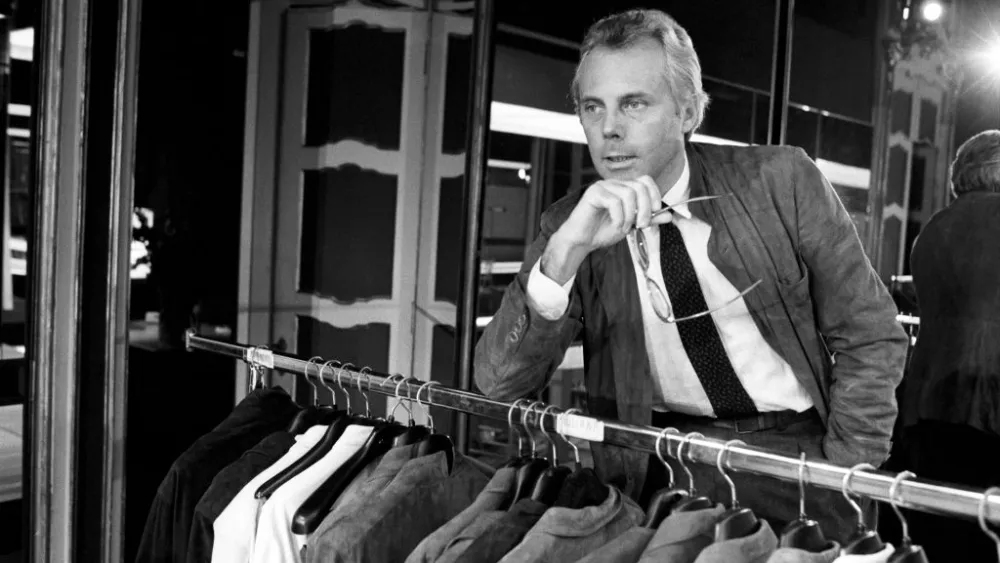
Giorgio Armani’s name has long been synonymous with elegance, sophistication, and timeless style. Today, the world mourns the loss of this legendary designer, who passed away at the age of 91. While the Armani empire stands as one of the greatest success stories in the history of fashion, the journey of its founder was not one of overnight fame—it was a story of passion, persistence, and vision. Let’s take a look back at how Giorgio Armani began his extraordinary journey and built an empire that changed the fashion world forever.
Early Life and Humble Beginnings
Giorgio Armani was born on July 11, 1934, in the small Italian town of Piacenza, near Milan. Raised during a period of political and social turbulence in Italy, Armani’s childhood was far from glamorous. His family was modest; his father worked as a shipping manager, and his mother was a homemaker. Armani initially had no dreams of becoming a fashion designer—his first love was medicine.
In fact, Armani enrolled at the University of Milan to study medicine, hoping to become a doctor. However, after three years, he realized that medicine was not his calling. He left university and began to look for work elsewhere.
First Steps into Fashion
Armani’s career in fashion started almost by accident. After leaving university, he took a job as a window dresser at La Rinascente, a prestigious department store in Milan. This role exposed him to the world of fabrics, design, and the art of presentation. Armani quickly moved up to become a buyer for men’s clothing, giving him an in-depth understanding of trends, textiles, and tailoring.
This experience was crucial—it allowed Armani to learn what customers wanted and what defined quality in clothing.
The Move to Design
By the 1960s, Armani began working as a designer for Nino Cerruti, a well-known Italian fashion house. Under Cerruti, Armani honed his skills in menswear design, perfecting the art of tailoring. He became known for creating soft, comfortable suits—a revolutionary idea at the time, since men’s suits were typically rigid and structured.
It was during this time that Armani met Sergio Galeotti, an architectural draftsman who would become his business partner and life partner. Galeotti recognized Armani’s immense talent and encouraged him to start his own line.
The Birth of Giorgio Armani Brand
In 1975, Armani and Galeotti co-founded the Giorgio Armani brand. They launched their first collection in Milan, introducing a new concept of menswear: soft tailoring with relaxed lines. Armani’s suits were elegant yet comfortable—a radical departure from the stiff, formal suits of the time. This innovation resonated with modern professionals who wanted to look stylish without sacrificing comfort.
Armani didn’t stop at menswear. In the same year, he introduced a women’s line, giving women the power suit—a symbol of empowerment and independence in the workplace. His designs redefined gender norms in fashion.
The Rise to Global Fame
Armani’s breakthrough moment came in 1980, when his designs were featured in the Hollywood film American Gigolo, starring Richard Gere. The film showcased Armani’s sleek suits, turning them into a cultural phenomenon and making Armani an international name.
From there, Armani expanded rapidly:
- Emporio Armani for youthful, trendy designs.
- Armani Exchange (A|X) for accessible, urban fashion.
- Armani Privé for haute couture.
- Armani Beauty, Armani Casa, and even luxury hotels.
By the 1990s and 2000s, Armani had become a global empire, representing Italian elegance worldwide.
Partnership, Loss, and Legacy
Sadly, Armani’s business partner Sergio Galeotti died in 1985, but Armani continued to lead the company alone, turning it into a multibillion-dollar powerhouse. He remained deeply involved in the creative process until his final days, ensuring that the brand stayed true to its roots of elegance and minimalism.
Giorgio Armani’s journey—from a medical student to a fashion icon—proves that passion and vision can redefine industries. He introduced a new language of style: understated luxury, impeccable tailoring, and timeless appeal. His work empowered both men and women to express confidence through clothing.
Today, as we remember Armani, we celebrate not just a designer, but a visionary who changed the face of fashion forever.