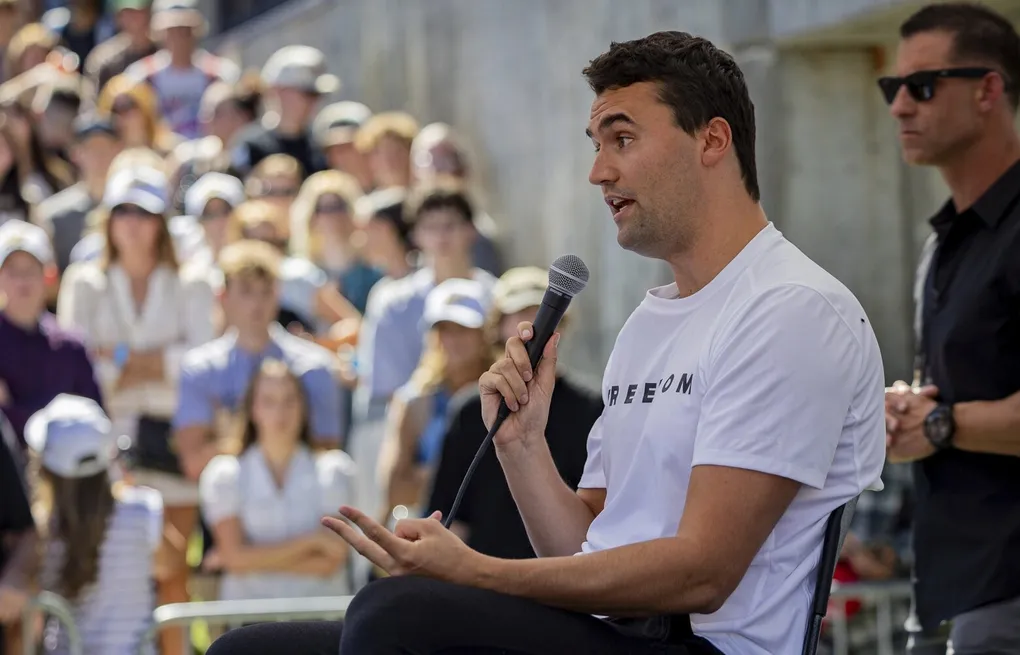
In a tragedy that has sent shockwaves across the United States, conservative activist Charlie Kirk was fatally shot during a speaking event at Utah Valley University. He was 31 years old. The incident occurred on September 10, 2025, and is already being labeled a significant act of political violence in a deeply polarized era.
Who Was Charlie Kirk?
Charlie Kirk was the founder and president of Turning Point USA (TPUSA), a conservative nonprofit aimed at promoting right-wing values among young Americans. Known for his outspoken support of former President Donald Trump, Kirk became a high-profile figure in conservative circles. With a commanding presence on social media and frequent appearances on Fox News and other conservative platforms, he cultivated a massive following among young conservatives.
From his early 20s, Kirk built TPUSA into a powerful movement on college campuses, championing “free speech,” opposing “woke culture,” and rallying against what he described as liberal indoctrination in academia. While admired by many for his political convictions and charisma, others criticized him for pushing divisive rhetoric and amplifying conspiracy theories.
The Shooting at Utah Valley University
The shooting unfolded during one of Kirk’s “American Comeback Tour” events—a speaking series that aimed to energize conservative youth ahead of the 2026 midterm elections. Witnesses report that chaos broke out as Kirk was taking the stage. Gunshots rang through the auditorium, leading to panic and confusion.
Security personnel and university officials attempted to evacuate the room, but Kirk was critically injured at the scene. He was transported to a nearby hospital, where he was later pronounced dead. Authorities have confirmed that a suspect is in custody, but as of now, a motive has not been publicly disclosed.
The university released a statement mourning the tragedy, expressing condolences to Kirk’s family and urging unity in the face of violence.
Reactions Pour In Across the Political Spectrum
The response from public figures was swift and emotional.
Former President Donald Trump called Kirk “a warrior for American values” and “a patriot who was taken far too soon.” Trump added that Kirk’s death was a reminder of the dangers faced by conservatives in today’s political climate.
President Joe Biden also issued a statement, condemning the violence unequivocally:
“We mourn the death of Charlie Kirk, just as we mourn every life taken by senseless violence. Political disagreements must never descend into acts of hate. This is a time to come together as a nation.”
Senator Ted Cruz called the shooting “an assault on free speech and a tragedy for the conservative movement,” while Representative Alexandria Ocasio-Cortez tweeted that “no matter how stark our political differences, violence is never justified. My condolences to Mr. Kirk’s family and loved ones.”
The bipartisan condemnation underscores the gravity of the moment, with many acknowledging the dangerous rise in politically motivated attacks in recent years.
A Polarizing Legacy
Charlie Kirk’s life and career leave behind a complicated legacy. To many young conservatives, he was a courageous truth-teller unafraid to stand up to what he viewed as a liberal elite. His ability to mobilize Gen Z conservatives and create viral political content made him one of the most influential right-wing activists of the past decade.
At the same time, critics accused him of spreading disinformation, especially regarding election integrity and COVID-19. He was also a frequent critic of the LGBTQ+ community, DEI initiatives, and immigration reform—stances that attracted both fierce supporters and passionate detractors.
His podcast, “The Charlie Kirk Show,” regularly ranked among the top political podcasts in the U.S., and he used the platform to rail against mainstream media, higher education, and progressive politicians.
Even in death, it’s clear that Kirk will remain a figure of both admiration and controversy.
The Bigger Picture: A Climate of Political Tension
Kirk’s death adds to a growing list of political figures targeted in recent years, including the 2022 assassination attempt on Supreme Court Justice Brett Kavanaugh and the 2023 attack on House Speaker Hakeem Jeffries’ staffer.
Analysts warn that these events are not isolated, but rather signs of a broader breakdown in political discourse. Rhetoric on social media and cable news has grown increasingly hostile, with adversaries often framed not as opponents, but as enemies. This toxic environment, experts say, can escalate into real-world violence.
In this case, investigators are probing whether the attack was politically motivated. The suspect’s identity has not yet been released to the public, and officials are urging citizens to refrain from speculation as the investigation unfolds.
Tributes and Memorials
Supporters have already begun organizing vigils and memorial services in honor of Kirk. At TPUSA headquarters in Phoenix, Arizona, a candlelight vigil drew hundreds of young conservatives, many of whom spoke about the impact Kirk had on their political awakening.
Kirk’s wife, Erika Frantzve Kirk, posted a heartbreaking tribute on Instagram, writing:
“He was my best friend, my partner, and a leader who gave everything for his cause. Charlie lived boldly and died doing what he loved—speaking truth.”
What Comes Next for Turning Point USA?
With Kirk’s sudden death, the future of Turning Point USA is uncertain. Some insiders suggest that longtime collaborators may step in to continue the mission, while others believe the organization may struggle without its charismatic founder.
TPUSA has issued a statement saying:
“We are devastated by the loss of our founder and leader. Charlie built a movement that will endure. We remain committed to the values he championed and will honor his legacy through action.”
The killing of Charlie Kirk is a devastating moment in American politics—not just for those who supported his views, but for all who believe in civil discourse and peaceful disagreement. His death raises painful questions about the future of political dialogue in the U.S., and whether we can learn to confront our ideological battles without violence.
Kirk’s supporters will remember him as a champion of conservative youth and a fighter for liberty. His critics will remember him as a provocateur whose rhetoric pushed boundaries. But no one can deny that his life, cut tragically short, made a lasting mark on America’s political landscape.
As the country mourns, one message is clear: the line between words and violence must not be blurred, and democracy demands better from all sides.