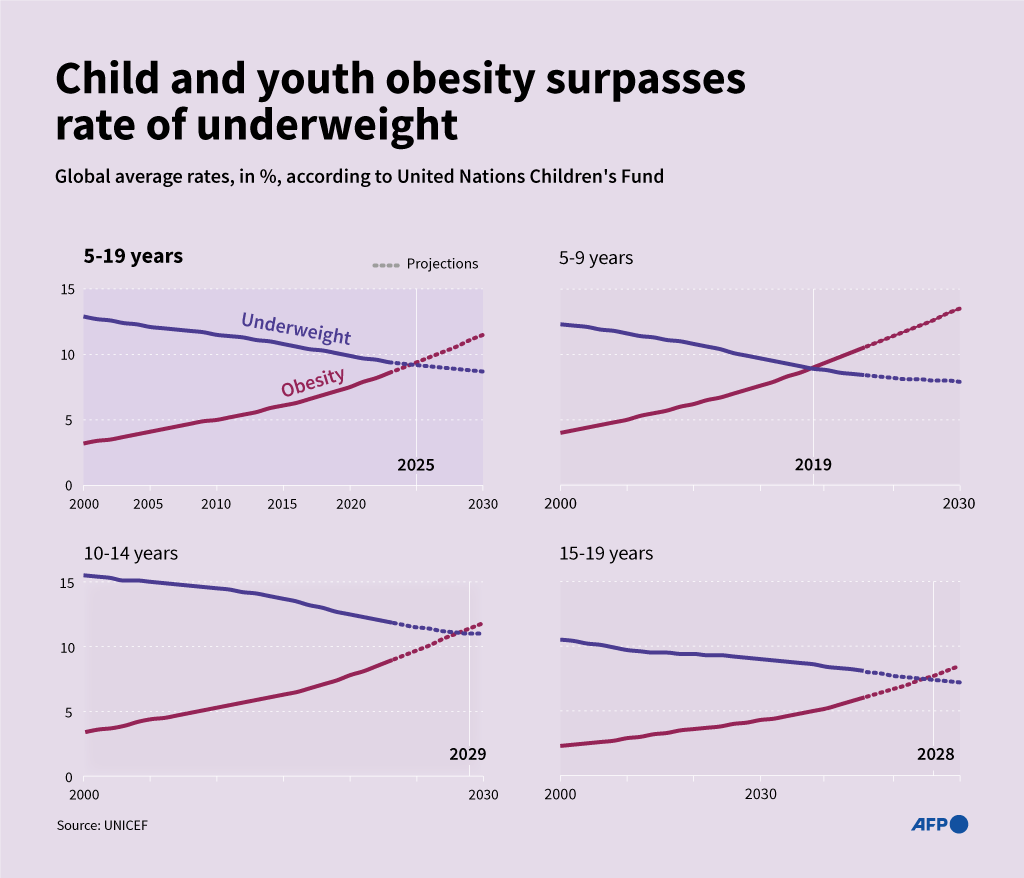
In a startling turn of global health dynamics, UNICEF has declared a chilling milestone: for the first time in human history, more children around the world are obese than underweight. This paradigm shift reveals how the face of malnutrition has transformed over the past two decades. Once, undernutrition—manifesting as stunting, wasting, and underweight—dominated global concerns; today, it’s the rise of obesity that is redefining childhood health crises.
The Numbers That Shake the World
According to the latest UNICEF–led report Feeding Profit: How Food Environments are Failing Children, an estimated 9.4% of children aged 5 to 19 are now obese—surpassing the 9.2% underweight rate.That means roughly 188 million children, or one in every ten, now lives with obesity.The shift is stark: in the year 2000, underweight prevalence was nearly 13%, while obesity stood at just 3%—a reversal that underscores the alarming rise of overweight children worldwide.While this prevalence pattern now holds true across most global regions, exceptions remain. Sub‑Saharan Africa and South Asia still see higher rates of underweight children, reflecting persistent food insecurity and poverty in those areas.
Geography of the Crisis: Where the Numbers Are Staggering
UNICEF’s findings expose startling regional disparities:
- Pacific Island nations see the highest obesity rates among youth, with 38% in Niue and 37% in the Cook Islands of children aged 5–19 classified as obese. Nauru is similarly alarmed, with roughly one-third affected
- In wealthier nations, rates remain elevated: around 21% of children in both the United States and the UAE are now obese; Chile lags behind but still high at 27%
This trend shows how obesity has expanded beyond high-income nations and taken root in diverse food environments.
What’s Driving This Shift?
1. Ultra‑Processed Foods (UPFs)
At the heart of this global public health shift is the explosive rise of ultra‑processed foods—high in sugar, refined carbs, fat, salt, and additives, but low in nutritional value. These cheap, calorie‑dense options are now a staple in many families’ diets, replacing traditional, nutrient‑rich meals
2. Aggressive Marketing
Children’s constant exposure to UPFs is aided by powerful marketing tactics. UNICEF’s global poll of 64,000 young people found that 75% had seen ads for sugary drinks, snacks, or fast foods in the previous week alone—and 60% said these ads increased their desire to consume them.
3. Unhealthy School and Retail Environments
Retail outlets and schools have become battlegrounds where unhealthy food options dominate. UPFs are marketed and sold where children spend most of their day, reinforcing poor dietary norms.
4. Policy Gaps
Many countries lack strong regulations restricting marketing of UPFs, implementing sugar taxes, enforcing clear food labeling, or banning junk food in schools. According to UNICEF, these policy shortcomings allow unhealthy food environments to flourish unchecked.
The Ripple Effects: Health, Development, and Society
Health Consequences
Childhood obesity isn’t a cosmetic issue—it’s a health emergency. Obesity raises risks of type II diabetes, cardiovascular disorders, insulin resistance, and even certain cancers later in life.
Cognitive & Mental Health Impact
Overweight and obesity can undermine cognitive development and mental health. Childhood nutrition plays an essential role in brain function, academic performance, and emotional regulation—making poor diets a threat to future potential.
Economic & Social Burdens
Long-term consequences include soaring healthcare expenses, lost productivity, and societal strain. One report projects economic costs will balloon to $4 trillion annually by 2035 due to obesity-related illnesses.
Economic & Social Burdens
Long-term consequences include soaring healthcare expenses, lost productivity, and societal strain. One report projects economic costs will balloon to $4 trillion annually by 2035 due to obesity-related illnesses.
A Call to Action: Turning the Tide
UNICEF is clear: obesity must be treated as a form of malnutrition deserving the same urgent policy and public health attention as undernutrition.
Governments Must:
Introduce sugar taxes and subsidies for nutritious alternatives
Enforce marketing restrictions on junk foods aimed at children.
Mandate front-of-package labeling to help families make informed choices.
Ban junk food from schools and implement healthy school meal programs.
Parents & Communities Should:
- Advocate for nutritious food access in schools and public spaces.
- Reduce children’s exposure to digital and traditional junk‑food marketing.
- Promote home-cooked meals, fruits, vegetables, and balanced diets.
Food Industry Must:
- Reformulate products to reduce sugar, salt, and unhealthy fats.
- Move toward responsible marketing, especially where children are concerned.